

Beyond the Title: 12 Questions with Kristy Vang

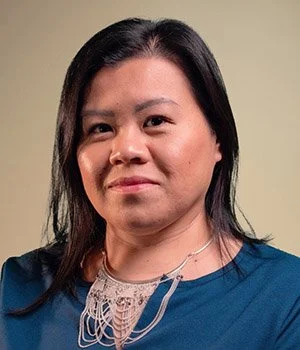
Kristy Vang
CEO, Hmong Wisconsin Chamber of Commerce
Kristy describes herself as an “ecosystem changer,” working not only to help businesses succeed but to strengthen the systems around them. Through her leadership at HWCC, she expands access to capital, builds stronger pathways for entrepreneurs, and creates opportunities for communities historically excluded from traditional systems. With nearly two decades of experience in nonprofit finance and operations, Kristy brings financial expertise, strategic leadership, and community-centered thinking. She holds a BBA in Accounting from UW-Milwaukee, is a Certified Nonprofit Accounting Professional, an ACRE alum, and is pursuing her MS in Nonprofit Management and Leadership. Her approach: build with community, for community.
01Built to Last starts with a strong foundation. What is the foundation your leadership is built on, and how do you return to it when things get shaky?
My leadership is built on trust, accountability, and community. I believe leadership isn't about having all the answers; it's about creating the conditions for people to contribute, grow, and move forward together.
When things get shaky, I return to purpose. I remind myself who we are serving, why the work matters, and what is within my control. I also return to listening; sometimes the best way forward is to slow down enough to hear what others are seeing that I may not be.
Most importantly, I remind myself that strong leadership is not about carrying everything myself. It is about building a foundation strong enough that others can lead alongside me.
02Where do you come from, and how do your roots keep you steady when leadership gets hard?
I come from a family and community that taught me the value of hard work, sacrifice, and creating opportunities for the next generation. Growing up Hmong American in Wisconsin, I saw both my community's resilience and the barriers that made it harder for people to move forward.
As a young adult, though, I became disillusioned with community work. I saw situations where leadership, resources, and good intentions did not always translate into meaningful impact. For a time, it made me question whether I wanted to be part of that work at all.
Eventually, I realized that walking away would not change the systems I was frustrated with. I could instead help build something better. That realization became part of my foundation as a leader.
When leadership gets hard, I return to those roots. I remember the sacrifices that created opportunities for me, and why I chose to come back to this work. It keeps me grounded in the responsibility to build stronger systems, create opportunities for others, and leave something better for the generations that follow.
03What's a piece of advice that has stood the test of time for you, the kind you still come back to years later?
One piece of advice I keep coming back to is simple: be true to yourself.
For a long time, I thought becoming a stronger leader meant becoming more like the leaders I admired: more outspoken, more polished, or more confident in certain spaces. Over time, I realized that trying to lead like someone else often pulled me further away from the strengths that made me effective in the first place.
I have learned that authenticity does not mean I stop growing or changing. It means I can grow without losing who I am. I can be thoughtful and still be decisive. I can listen before I speak and still have a strong voice. I can lead with empathy while holding people accountable.
When I question whether I belong in a room or whether I am leading the “right” way, I come back to that advice. The best leader I can be is not a version of someone else. It is the most grounded, courageous, and authentic version of myself.
04What's a book, quote, lyric, or scripture that has stayed with you and shaped how you lead or live?
A quote that has stayed with me is from Simon Sinek, about how working hard for something we don't care about is stress, while working hard for something we love is passion.
It reminds me that hard work does not always mean I am on the wrong path. The work I care about most has also been the most challenging. Leadership can be exhausting, especially when you are trying to change systems, build something stronger, and carry responsibility for others.
What keeps me going is knowing why the work matters to me. I care deeply about creating opportunities, strengthening communities, and leaving things better than I found them. When the work becomes difficult, this idea reminds me to reconnect with that purpose. The challenges may not become easier, but remembering why I chose this work helps me see the difference between simply being busy and being committed to something I truly believe in.
05What's something you've had to rebuild after it broke or fell apart, and what did that teach you about building things that last?
One of the most important things I have had to rebuild was myself as a leader. Early in my career, our executive leadership changed, and I was suddenly promoted into a director role with no prior management experience. I was given the responsibility, but very little coaching on how to actually lead people.
I became a version of myself that I am not proud of. I micromanaged, focused too much on doing things the way I thought they should be done, and didn't give my team enough space to grow or contribute. I thought being responsible for everything meant I needed to control everything.
Eventually, I had to recognize that the way I was leading wasn't sustainable for the people around me or for me. Rebuilding meant learning to trust others, coach instead of control, listen more, and understand that my success as a leader is not measured by how much I can personally accomplish.
That experience taught me that building something that lasts starts with people. Strong systems matter, but so do trust, development, and giving people room to lead. It also taught me that sometimes the thing you have to rebuild first is yourself.
06What's one question every leader should ask if they want to build something that outlasts them, and why?
“If I walked away tomorrow, would what we built continue without me?”
For me, that question challenges the idea that being needed is the same as being a successful leader. Earlier in my career, I thought leadership meant having the answers, solving the problems, and making sure everything got done. I have learned that if everything depends on me, I haven't built something that lasts.
Building something that outlasts you means developing people, sharing knowledge, creating strong systems, and giving others the confidence and authority to lead. It means being intentional about succession long before you are ready to leave.
Ultimately, I want my impact to be measured not by how much an organization needed me while I was there, but by how well the people and systems I helped build continue to thrive after I am gone.
07Who are you actively preparing to carry this work forward, and what are you doing to set them up to succeed without you?
I don't think one person is ready to carry this work forward. For me, it is about building a pipeline of people who are prepared to lead in different ways and in different spaces.
That belief is also shaping where we are going as an organization. Through the Hmong Wisconsin Chamber of Commerce's charitable arm, the HWCC Advancement Center, we are intentionally focusing on leadership development, leadership pipelines, and representation. We want to help prepare people not only to lead within our organizations and businesses, but to have a voice and a seat at the tables where decisions are being made.
Internally, I am trying to practice the same thing by sharing knowledge, giving others ownership, creating opportunities to stretch, and allowing people to develop their own leadership styles.
If we want this work to outlast any one of us, we have to intentionally prepare the people who will carry it forward. For me, that means building leaders today who will open doors for others tomorrow.
08When leadership feels heavy, what do you turn to (music, travel, culture, faith) that restores you and keeps you feeling like yourself?
When leadership feels heavy, I turn to things that let me simply be myself without having to make the next decision or solve the next problem.
Sometimes that means getting lost in a Chinese historical drama, traveling somewhere new, or sitting down with Hmong cross-stitching and letting myself slow down. I also find restoration in spending time with family and friends, the people who knew me before the titles and responsibilities and who remind me that I am more than the work I do.
Those moments help me step outside of leadership for a while. They give me space to reset, reconnect with my culture, laugh, be creative, and come back with a clearer mind.
I have learned that restoration is not separate from leadership. Making space for what keeps me grounded and connected to who I am helps me keep showing up for others.
09When you think about the legacy you want to leave, what do you hope still stands long after you've moved on?
When I think about legacy, I do not necessarily think about whether people remember my name. I think about whether what I helped build still creates opportunities long after I am gone.
I hope there are stronger systems that make it easier for entrepreneurs to access capital and opportunities, leadership pipelines that ensure our communities are represented in the rooms where decisions are made, and pathways for families to build and pass wealth from one generation to the next.
I also hope the people I invested in are leading in ways I could never have imagined, and opening doors for the people coming behind them.
Ultimately, I want to leave things better than I found them. If the work continues, the organization remains strong, and the next generation has more opportunities because of something I helped put in place, that is the legacy I hope still stands.
10What's a small daily habit or discipline that has compounded into something meaningful over time?
One small habit that has compounded over time is reflection. I constantly ask myself: What worked? What did not? What could I have handled differently? What am I learning about myself?
Earlier in my career, I was much more focused on getting things done. Over time, I have learned that growth comes from taking the time to understand not just what happened, but why.
Reflection has helped me recognize patterns in my leadership, own mistakes, and become more intentional about how I show up for others. It has also taught me that I do not have to get everything right the first time; I just have to be willing to learn from it.
Those small moments of reflection may not feel significant in the moment, but over the years they have shaped how I lead, make decisions, and continue becoming the person and leader I want to be.
11What's a moment in your life where the music playing in the background ended up meaning more than you expected, a song that showed up right when you needed it, or made an ordinary moment stick with you?
A song that has stayed with me is “Dancing With Your Ghost” by Sasha Alex Sloan. I remember hearing it and being surprised by how deeply it affected me. It captured something hard to put into words: missing someone while still carrying pieces of them.
Over time, the song became connected to memories of people, relationships, and moments that are no longer part of my everyday life. It reminded me that moving forward does not always mean leaving everything behind. Sometimes people stay with us through the way we think, the choices we make, and even the smallest memories that unexpectedly come back.
Now when I hear it, it reminds me to appreciate people while they are here and to make space for the relationships that matter. Life and leadership can become so busy that it is easy to keep moving from one responsibility to the next. That song reminds me that some of the most meaningful parts of life are the people we carry with us, even when they are no longer beside us.
12What's a tradition in your life or family that you hope lasts for generations?
One part of Hmong culture that I hope lasts for generations is our strong sense of community, the belief that we are connected to one another and that relationships matter.
Growing up, I saw how family and community showed up for each other, especially during difficult times. Our culture has a resilience that comes from knowing you do not have to navigate life alone. We celebrate together, grieve together, help one another through challenges, and find ways to keep moving forward.
As future generations become more independent and our community continues to evolve, I hope we never lose that connection. Traditions may change, and each generation will find its own way of expressing its identity, but I hope the values underneath them remain.
I want future generations to know where they come from, value relationships, show up for one another, and carry forward the resilience that has allowed our community to rebuild and thrive wherever we have called home.